Lopez Media Counsel advises museums, publishers, and archives on image rights, content governance, and complex permissions challenges. We help you address rights problems before they delay publications, complicate exhibitions, or create institutional risk.
Get in touch →Rights questions in visual media are rarely simple. A publication moves forward without clear image documentation. An exhibition hits clearance problems six months before opening. A digitization initiative stalls on orphan works. An AI content policy creates new legal exposure nobody has mapped yet.
Most institutions bring in help when a problem has already surfaced. We work upstream and help you build the frameworks, workflows, and decision-making practices that make rights problems easier to find and cheaper to solve.
Lopez Media Counsel pairs deep institutional rights expertise with the kind of systems and product thinking that turns one-off solutions into repeatable ones. We don't just clear the rights. We help you build the practice.
We evaluate your permissions workflows, rights documentation, and metadata practices to identify legal and operational risk before it surfaces at the wrong moment. Deliverables are practical, including findings your team can act on, not a report that lives in a folder.
We advise on rights-sensitive projects across permanent collections, publication, exhibition, and digital initiatives, from a single clearance to institution-wide content governance frameworks. We work through difficult decisions with care, clarity, and practical judgment about what actually matters.
For organizations that need senior-level rights expertise without a full-time hire, we provide ongoing counsel on a retained basis. You get a trusted advisor your team can reach when questions come up and a partner who understands how your institution works, not just how rights work in the abstract.
We support complex image research and permissions execution on projects where subject matter expertise matters: multi-party permissions, rights research and contract negotiations for high-stakes publications and exhibitions.
Foreign language editions are often treated as an afterthought in the rights process, but they require entirely separate clearance. Licenses granted for an English-language publication rarely transfer. We manage the full re-clearance process for translated editions: identifying which rights holders control reproduction in the relevant territory, working with the appropriate collecting societies (DACS, ADAGP, VG Bild-Kunst, and others), and delivering documentation the foreign publisher can actually use.
Not every project starts with an image list. We work from editorial or curatorial briefs to identify and recommend images that fit specific descriptive, thematic, or visual criteria, sourcing across archives, collections, and agencies before licensing begins. This is particularly useful for publications and exhibitions in early development, where the right image hasn't been found yet, not just cleared.
Museums and cultural institutions. University and scholarly publishers. Archives and special collections. Research institutes. Creative and editorial teams.
Cleared reproduction rights for more than 600 works for a landmark exhibition on LGBTQ+ history for use in the exhibition publication, on wall labels and signage and in press. The project required working through permissions across private collections, institutional archives, and estates, including works with contested, unclear, or restricted rights. Managing rights at this scale, for material of this sensitivity, required both deep archival research and careful negotiation with rights holders across the globe.
Rights evaluation and clearance across a collection spanning artwork, photography, fashion, design objects, historical ephemera, and archival materials, assessing what could be released publicly online. The collection's breadth is part of what makes rights evaluation demanding: a photograph, a garment, a political poster, and a scrapbook each carry different rights considerations, and the institution's mandate for broad public access means those determinations have to be made carefully and in volume. Where evaluation identified a path to clearance, we handled negotiations with rights holders directly. Getting rights wrong at an institution of this visibility and public mission carries real consequences. The work required careful analysis and judgment about when to clear, when to flag risk, and when to leave something offline.
Cleared illustration rights for the French-language edition of the Joan Mitchell Retrospective catalogue, published by Fondation Louis Vuitton in conjunction with the exhibition held in Paris in 2022. The clearance focused on documentary photography: portraits, studio photographs, and images documenting Mitchell's life, circles, and working environment. Documentary photography of this kind presents its own rights challenges. Images are scattered across personal archives, estates, and private collections, ownership is often unclear or undocumented, and the subjects themselves may introduce additional rights considerations. Clearing them for a foreign language edition added a further layer, requiring separate licenses for the French publication from rights holders who may have had no prior relationship with the original English-language project.
Rights research and clearance for The Scores Project: Essays on Experimental Notation in Music, Art, Poetry, and Dance, 1950–1975, a Getty open-access publication combining a fully interactive digital archive with a print edition. The source materials are ephemera: scores, notations, performance documents, and audiovisual recordings from the postwar avant-garde, with provenance distributed across private collections, archives, and estates. The hybrid format added layers of difficulty, as digital and print rights required separate treatment, and open-access licensing introduced additional considerations on top of standard clearance. For many objects, rights ownership had never been formally established. This required thorough rights research and documentation throughout, recording the steps taken to locate rights holders at every stage of the project.
Ongoing rights evaluation of film and video items in the collection to assess the risk of making them publicly available online. Each item requires disaggregating the rights embedded within it: underlying production rights, music, art, photography, written materials, and talent clearances, each of which may be held by different parties, governed by different terms, and subject to different copyright status depending on when it was created. We assess each rights layer for current copyright status and identify where clearance would be required, then synthesize that analysis into a risk framework the institution can use to prioritize and make decisions about what to release. The goal is not just to flag problems but to give the institution a repeatable methodology for evaluating its collection systematically.
Cleared images for press across nearly 100 museums and cultural venues throughout Southern California for Pacific Standard Time, the landmark initiative exploring artistic and cultural exchange between Los Angeles and the Pacific Rim. Managing rights for a project at this geographic and institutional scale, involving scores of concurrent exhibitions and events, required coordinating permissions across a vast range of collections and institutions on an accelerated timeline.
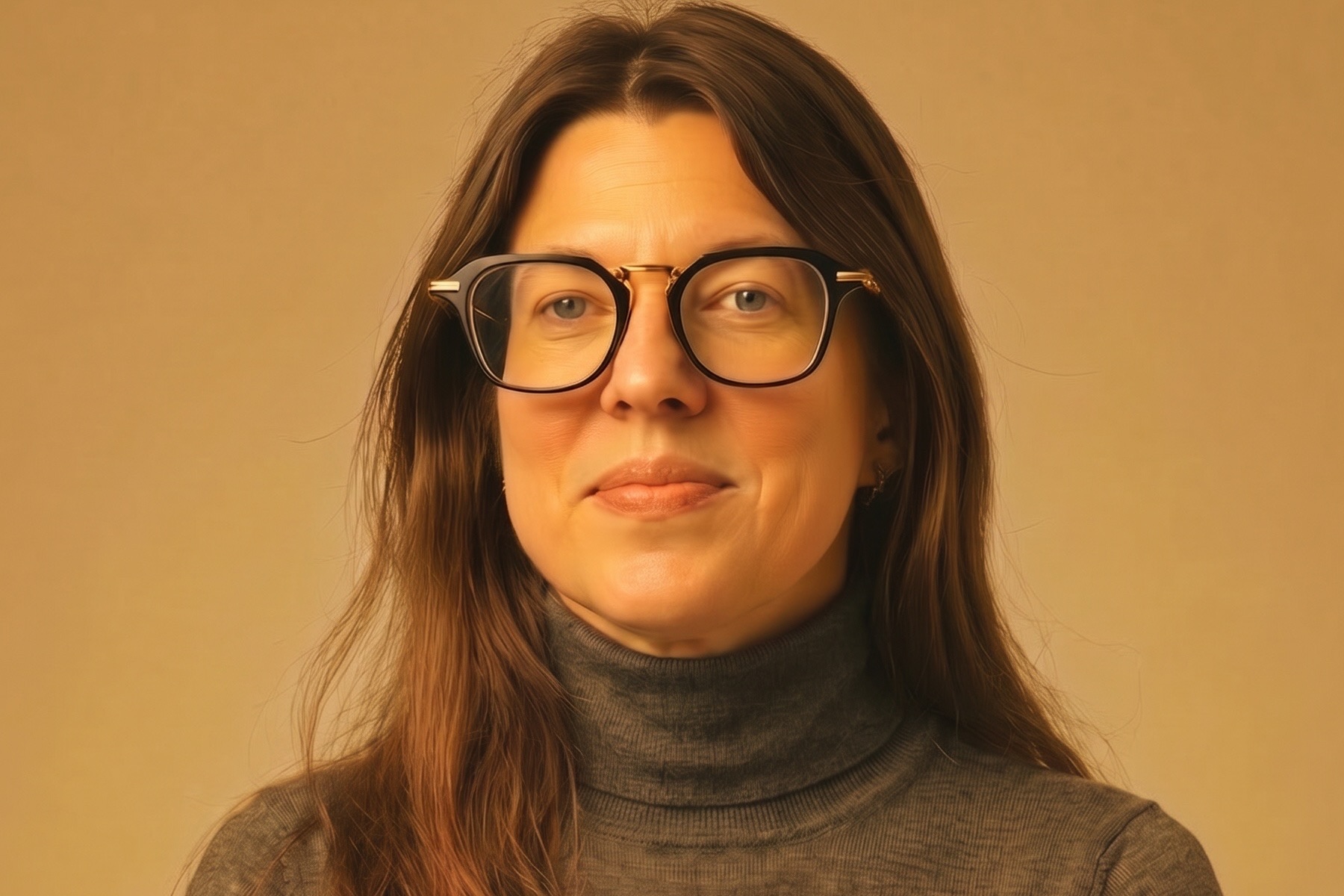
Pauline founded Lopez Media Counsel in 2012 after more than a decade working inside some of the country's most significant cultural institutions.
She began her career at the UCLA Film & Television Archive, where she built copyright workflows, researched orphan works for public release, and licensed archival film and television to distributors including Turner Classic Movies, Criterion Collection, and Milestone Film & Video. She then joined the J. Paul Getty Museum as Assistant Registrar for Rights and Reproductions, negotiating reproduction rights, evaluating fair use, and managing the digital rights process for the museum's collections and publications. From there she served as Rights and Permissions Manager at the Walker Art Center, clearing video work for on-site exhibition and overseeing film and video licensing for the International Pop exhibition, which included a film program of over forty films.
Since founding Lopez Media Counsel, Pauline has worked with some of the most respected institutions in American cultural life, from the Smithsonian to the Guggenheim to multiple departments of the J. Paul Getty Trust. Her practice spans image rights and clearance, rights governance, digital asset management, and emerging questions around AI-generated content and provenance.
Alongside her institutional client work, Pauline has spent a decade managing digital assets at enterprise scale, bringing a systems-level understanding of content governance that few rights specialists can match. It's a rare combination: the institutional literacy of someone who understands the rights and reproduction needs of major museums, and the operational experience of someone who has managed content across complex systems and workflows.
She holds an M.A. in Film & Media Studies from UC Santa Barbara and a B.A. in Art History from Smith College.
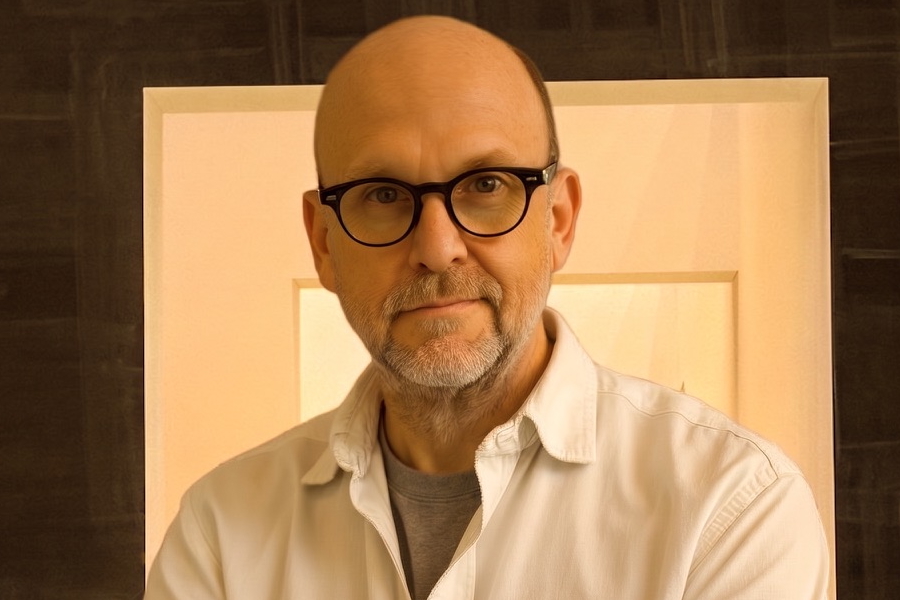
Noah brings 15 years of product strategy and systems thinking to Lopez Media Counsel.
His career spans Fortune 50 enterprises and high-growth companies, building commerce and platform systems at Meta, designing B2B infrastructure at Oura Ring, leading discovery and conversion products at eBay, and modernizing content infrastructure at Gap. He has spent his career taking complex operational challenges and building the systems, workflows, and frameworks that make them manageable at scale.
At Lopez Media Counsel, Noah provides the operational and strategic layer that makes rights advisory more than a one-off engagement. Where Pauline brings institutional depth and subject matter expertise, Noah brings the product discipline to turn that expertise into repeatable systems, governance frameworks that hold, workflows that scale, and recommendations that organizations can actually implement. He has worked as both an embedded product leader at major enterprises and as a fractional product executive for smaller organizations, which is precisely the model Lopez Media Counsel offers its clients.
Noah holds an M.A. from UC Santa Barbara and a B.A. from the University of Arizona.
Most rights issues don't announce themselves. They surface at the wrong moment — when a publication is at press, when an exhibition is about to open, when a digital initiative is already live. We help clients get ahead of them.
Contact us to discuss your project →